Isabel Nieves / Shutterstock
Torremolinos Travel Guide
15km (9 miles) W of Málaga, 122km (76 miles) E of Algeciras, 568km (353 miles) S of Madrid
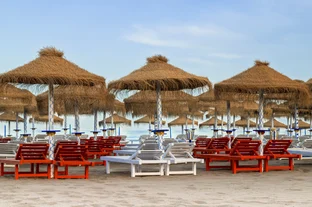
This Mediterranean beach resort stands for everything good and bad about the Costa del Sol. Europeans and Americans flock here for the bargain rooms, the sweaty social scene, and the preponderance of English-speaking bars and coffee shops. The living is easy, people are fun, and there are no historical monuments to visit. Green parrots chatter from the palm trees and gulls circle indolently over the sands.
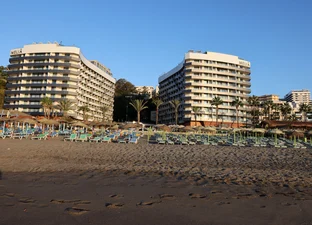
The first hotel on the Costa del Sol went up here in 1927, but Torrie largely remained a sleepy fishing village until the 1950s, when the aggressive marketing of the Costa del Sol began. Its beaches (per proud city fathers) were the first to go topless in Spain, which gave Torrie the air of being avant-garde. Of the 6km of beaches, we prefer Playamar for its more relaxed atmosphere. Overdevelopment does have its upside: Hotels often slash room prices to lure customers.
A Look at the History of Torremolinos and the Costa del Sol
Once the Costa del Sol was a retreat of the rich and famous, and in the words of British author Laurie Lee, "beautiful but exhausting and seemingly forgotten by the world." The world has now discovered this Mediterranean coastline with a vengeance.
Some social historians claim that the Costa del Sol -- no one knows when or how that touristy moniker debuted -- had its roots in 1932 when Carlotta Alessandri arrived, buying property west of the village of Torremolinos and announcing that she was going to launch "a Spanish Riviera to equal the French Riviera." But before she could achieve her dream, the Spanish Civil War intervened.
The marquis of Najera arrived in Torremolinos after World War II, bringing his fellow blue bloods. In time, many Spanish noble families, along with a collection of more questionable royals and aristocrats, arrived to bask in the sun. Artists, writers like Ernest Hemingway and James Michener, even movie stars, followed suit.
In the 1960s, hippies arrived in Torremolinos and brought their drugs with them. You would never have known a right-wing dictator was in power: Flower power and the wafting smell of pot filled the streets.
Turmoil in the Middle East and the 1973 oil crisis drove thousands of Arabs to the coast, seeking safer havens. The fall of the shah of Iran drove many other rich Iranians here.
In the 1970s, the London tabloids dubbed Costa the "Costa del Crime." A lack of extradition laws between Spain and Britain -- a situation that's since been remedied -- encouraged the arrival in Spain of dozens of "British jack-the-lad crooks." These embezzlers and con artists fled justice in England and headed for the coast, where they partied extravagantly and uninhibitedly.
By the time the 1980s arrived, the reputation of the coast had largely shifted from caviar and champagne to burgers and beer. Despite that, many big names continued to visit. Sean Connery, for example, was an annual visitor until 1998, and Antonio Banderas and Melanie Griffith own a second home in Los Monteros on the outskirts of Marbella. Julio Iglesias has a villa near Coín, and Bruce Willis owns a retreat outside Estepona.
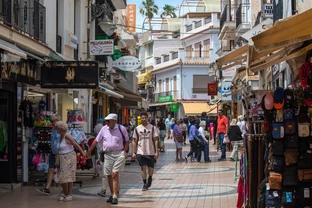
Today Torremolinos is a place where everyone and anyone can let loose. Lager louts from the industrial Midlands of England parade through the narrow streets at night pursuing wine, women, and drugs. Religious cultists, real-estate hawkers, Las Vegas-style showgirls, and male hustlers in well-filled bikinis all feel at home here. Even young Middle Eastern women, minus their burkas, can be seen on the beach in bikinis. It's a free for all.