Tossa de Mar Travel Guide
90km (56 miles) N of Barcelona, 12km (7 1/2 miles) NE of Lloret de Mar
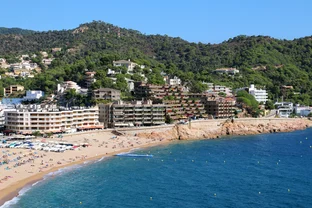
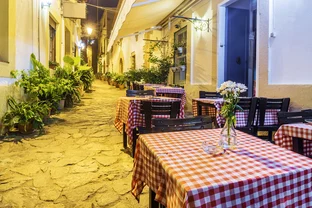
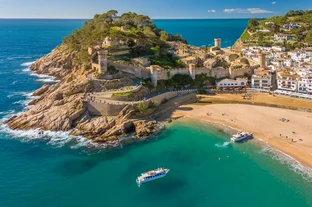
With its fairytale 12th-century castle walls, labyrinthine old quarter, and sandy beaches, Tossa de Mar is perhaps the most attractive base for a Costa Brava vacation. Not only does the town have more joie de vivre than its tourist-crammed neighbors to the south, Blanes and Lloret de Mar, it has been shielded from overdevelopment by the towering cliffs that surround its main cove.
In the 19th century, Tossa was a significant port for the cork industry. When that business declined in the 20th century, many citizens emigrated to America and the town became a getaway for artists and writers—Marc Chagall called it a “blue paradise.” In the 1950s, thanks in large part to the Ava Gardner movie Pandora and the Flying Dutchman, tourists began to discover Tossa’s charms, and a new industry was born.
To experience the full charm of Tossa de Mar, take a walk through around the 12th-century walled town, known as Vila Vella. Enter through Torre de les Hores, then follow signs to Plaça del Pintor J. Villalonga, where you’ll find steps that let you walk along the medieval ramparts. In 1914, archaeologists uncovered the ruins of one of the grandest Roman villas on the Costa Brava, Els Ametllers Roman Villa (Avenida de Pelegri, 5; free admission). Inhabited from the 1st century b.c. to the 6th century a.d., it oversaw an estate of vineyards that produced wine for export to Rome. During the summer, beautiful mosaic floors of the rooms are uncovered for viewing.
Tossa has two main beaches, Mar Gran and the smaller Mar Menuda, and the twisting coast roads to the north and south lead to further secluded coves.
Note: Tossa enjoys a broad base of international visitors -- so many that in summer it's next to impossible to find a room unless reservations are made far in advance.