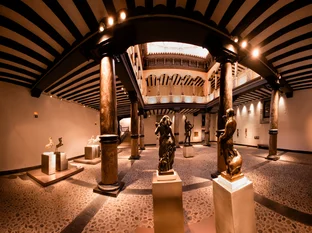
AlexeMarcel / Shutterstock
Zaragoza Travel Guide
322km (200 miles) NE of Madrid, 306km (190 miles) W of Barcelona
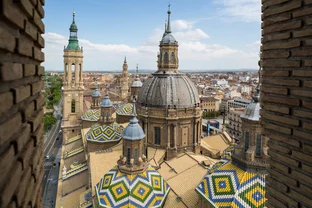
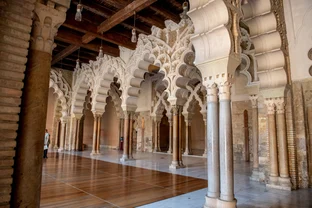
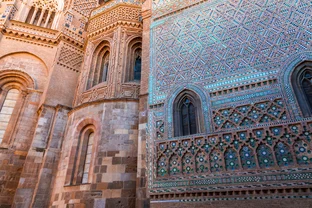
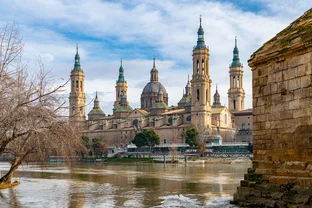
According to legend, the Virgin Mary appeared to Santiago (St. James the Apostle), patron saint of Spain, on the banks of the Río Ebro and ordered him to build a church on the site of the current cathedral, itself a Mudéjar landmark and important pilgrimage center. Today, Zaragoza, which sits at the center of a rich alluvial plain, is a bustling, prosperous, commercial city of wide boulevards and arcades. It has not one but two cathedrals, and, like Santiago de Compostela in Galicia, was a major pilgrimage center.
Founded by Carthaginians, Zaragoza first flourished as the Roman colony of Caesaraugusta. As an independent Muslim principality in the 11th century, it played a pivotal role in Christian-Muslim political relations; after being conquered by Christian forces, Zaragoza became the seat of the medieval kingdom of Aragón.
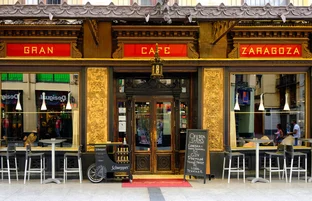
Modern Zaragoza is a city of nearly 700,000 people—nearly three-quarters of the entire population of Aragón live here in the province’s capital. With more than 33,000 students, the Universidad de Zaragoza has livened up this once-staid city. Cafes, theaters, restaurants, music bars, and taverns have boomed in recent years. It is the provincial capital of the region of Aragon.