|
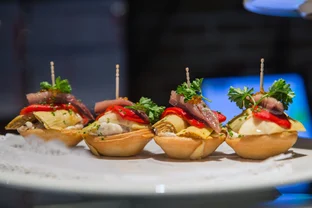
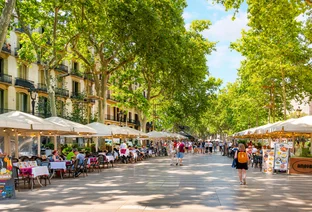
RestaurantsWhether it's a hearty nosh-up in an old-style tavern, a late supper in one of the new cutting-edge eateries, a tapa or two taken leaning against a bar, or an alfresco paella, Barcelona can accommodate you very nicely. Not only does it have a culinary tradition far different from that of the rest of Spain, but its new breed of chefs, led by Ferran Adrià of El Bulli fame, has taken over the mantle from France as the Continent's new culinary hot spot. The turning point came in 2002, when that year's edition of Le Guide des Gourmands, the French foodie bible of where to buy and eat the best products, named Barcelona the "most gourmand" city in Europe -- the first time a non-French city has been cited in its 15 years of publication. The criteria for the accolade are the availability of products; the quality of local wine, market produce, and restaurants; and, in the spirit of the bon vivant, the sensibility of the local population as to what goes into their stomachs. Barcelona came up trumps in all areas. The buzzwords in the metropolis's culinary world are "eclectic fusion," which mean roughly either blending a dish from one region (such as Navarra) with that of another (like Asturias) and adding a few extra herbs, spices, and je ne sais quoi; or unexpectedly mingling traditional local dishes like pigeon with, say, pears, or cherries with anis, or pigs' trotters with crab. The resultant hybrid plato is usually a delicious new taste experience. It's a feature you'll find in spots like Gaig and Hisop and light-years away from the hearty, no-frills botifarras (sausages) and estofats (stews) of yesteryear. What Makes it Catalan Cuisine Much of what these new chefs do is put an avant-garde twist on traditional Catalan cuisine. But what is that exactly? What Catalans eat is recognizably different from the cuisine in the rest of Spain, and it varies within the region from the Mediterranean coastline and islands to the inland villages and Pyrénées Mountains. Indeed, Catalan cuisine is more influenced by much of Europe (especially France) and the Mediterranean arc rather than by Castile. Writer Colman Andrews in Catalan Cuisine, his definitive English-language book on the subject (Grub Street, 1997) calls it "Europe's Last Great Culinary Secret." Many of the techniques and basic recipes can be traced back to medieval times and, as any Catalan is only too willing to point out, the quality of the produce proceeding from the Països Catalans (Catalan countries) is some of the best available. The same goes for the locally produced wine. The D.O.s (domaines ordinaires) of the Penedès and Priorat regions are now as internationally renowned as La Rioja and the local cava (sparking, champagne-type wine) consumed at celebratory tables from Melbourne to Manchester. If there is one food item that symbolizes Catalan cuisine, it is the pa amb tomàquet. Originally invented as a way of softening stale bread during the lean years of the civil war, there is barely a restaurant in Catalonia, from the most humble workman's canteen to a Michelin-starred palace that does not have it on the menu. In its simplest form, it consists of a slice of rustic white bread that has been rubbed with the pulp of a cut tomato and drizzled with olive oil. Sometimes, especially when the bread is toasted, you are given a tomato to do this yourself and a clove of garlic to add extra flavor. On these occasions, you top the bread with cheese, pâté, chorizo (or any other cured meat), or Iberian ham, producing what's known as a torrada. Catalan cuisine is marked by combinations that at first seem at odds with one other: Red meat and fish are cooked in the same dish; nuts are pulped for sauces; poultry is cooked with fruit; pulse (bean) dishes are never vegetarian; and there is not one part of a pig that isn't consumed. Concoctions that you will see popping up on menus time and time again include zarzuela (a rich fish stew), botifarra amb mongetes (pork sausage with white beans), faves a la catalana (broad beans with Iberian ham), samfaina (a sauce of eggplant, peppers, and zucchini), esqueixada (a salted cod salad), fideuà (similar to a paella, but with noodles replacing the rice), and miel i mato (a soft cheese with honey). It's hearty fare, and far more elaborate than the food of Southern Spain. In its most traditional form, it doesn't suit light appetites, which is why many locals have only one main meal a day (normally at lunch), with perhaps a light supper of a torrada in the evenings. Breakfast is also a light affair: a milky coffee (café con leche in Spanish, café amb llet in Catalan) with a croissant or doughnut is what most people survive on until lunchtime. Many bars offer fresh orange juice. When You Dine in Barcelona Catalans generally have lunch between 2 and 4pm and dinner after 9pm. Most kitchens stay open in the evenings until about 11pm. It is highly recommended that you make lunch your main meal and take advantage of the menú del día (lunch of the day) that is offered in the majority of eateries. It normally consists of three courses (wine and/or coffee and dessert included) and, at between 8€ and 12€ ($10-$15) per head, is an extremely cost-effective way of trying out some of the pricier establishments. Tipping always seems to confuse visitors, mainly because some restaurants list the 7% IVA (sales tax) separately on the bill. This is not a service charge; in fact, it is illegal for restaurants to charge for service. As a general rule, tips (in cash) of about 5% should be left in cheap to moderate restaurants and 10% in more expensive ones. In bars, just leave a few coins or round your bill up to the nearest euro. If you are really unhappy with the service or food and think that it warrants following up, you are entitled to ask for a hoja de reclamación (complaint form) from the management. These are then perused by independent inspectors. In general, vegetarians don't fare well here. Vegetarian restaurants are more common than they were 10 or 15 years ago, but with some notable exceptions (such as Organic) "creative cooking" coupled with "meat-free" isn't widely practiced in Barcelona. Contemporary places such as Pla, Anima, and Juicy Jones are a good bet, with always a couple of vegetarian options on offer. Apart from a tortilla, don't expect this in the traditional, old-style taverns and always double-check; the Catalan word carn (carne in Spanish) only refers to red meat. Asking for a dish "without" (sens in Catalan, sin in Spanish) does not guarantee it arrives fish- or chicken-free. Restaurants and bars of over 100 sq. m (1,076 sq. ft.) have nonsmoking areas, though in bars smoke often tends to drift across from the usually much larger smoking area. To be on the safe side, try one of the outside terraces for a relatively smoke-free (if not smog-free) meal or drink. Below is only a small selection of the hundreds of Barcelonese restaurants, cafes, and bars. When deciding where to dine, be aware that Barcelona is a victim of its own popularity. The constant influx of tourists means that many places (especially on and around Les Ramblas) now think nothing of offering a microwaved paella or charging 10 times the average for a cup of coffee. But in the smaller streets of the Barri Gòtic, and along the blocks of the Eixample area (which has largely escaped the side effects of mass tourism) there are still plenty of value-for-money establishments that take enormous pride in introducing you to the delights of the local cuisine. And if you get tired of the local grub, you'll find cheap places to eat around El Raval, the city's most multicultural neighborhood, where dozens of restaurants are run by Pakistanis, Moroccans, and South Americans.¡Bon profit! Barcelona's Green Scene Being a "veggie" no longer means being an outsider in the Catalan capital. In the past decade the traditional dominance of carnivore-oriented establishments has been challenged by a small but growing number of vegetarian restaurants. In this section you'll find some of the best. You don't have to confine yourself to 100% green establishments to get the goods, though, as many standard Catalan eating spots offer a large choice of noncarnivorous platos. Apart from the ubiquitous tortilla (made, naturalmente, with eggs Spanish-style and not from cornmeal Mexican-style), check out their menus for dishes like escalivada (grilled red and green pepper salad), berengenas al horno (eggplant baked in the oven), calabaza guisada (stewed pumpkin), setas al jerez (mushrooms cooked in sherry), and pisto (Spain's answer to ratatouille with tomatoes, peppers, eggplant courgettes, and onions all cooked in oil and garlic: Avoid the Manchego version though as this has bits of ham in it). Jamón (Mountain or cooked, Serrano or York), is scarcely regarded as "real" meat in Spain and can even appear in apparently innocuous dishes such as caldo (broth), so confirm with the waiter before you order. Arabic, Indian, and Italian restaurants may also provide what you're looking for, with their inventive range of couscous, rice, and pasta-based dishes, and if fish is an acceptable option, there are of course, plenty of seafood restaurants to choose from, though these tend to be expensive. A Wine Taster's Secret Address It doesn't get much better in Barcelona than an afternoon spent on the terrace of La Vinya del Senyor, Plaça Santa María 5 (tel. 93-310-33-79), taking in the glorious Gothic facade of Santa María del Mar. You could even take a wine connoisseur like Mel Brooks (when he's not counting his take from The Producers), and I think even this hard-to-please man would be pleased. The wine list will inspire awe. Imagine, for example, 13 Priorats, 31 Riojas, and more than a dozen vintages of the legendary Vega Sicilia. In all, there are more than 300 wines and selected cavas, sherries, and moscatells, and the list is constantly rotated so you can always expect some new surprise on the carte. If you don't want a bottle, you'll find some two dozen wines offered by the glass, including a sublime 1994 Jané Ventura Cabernet Sauvignon. To go with your wine, tantalizing tapas are served, including walnut rolls drizzled in olive oil, cured Iberian ham, and French cheese. Tapas cost from 2.50€-6.50€ ($3.15-$8.15). American Express, Diners Club, MasterCard, and Visa are accepted. Hours are Tuesday through Saturday from noon to 1:30am and Sunday from noon to midnight. Metro: Jaume I or Barceloneta.
Maps Note: This information was accurate when it was published, but can change without notice. Please be sure to confirm all rates and details directly with the companies in question before planning your trip.
|
|
|||||||||||||||||||||||||||||||||||||||||||||||||||||||||||||||||||||||||||||||||||||||||||||||||||||||||||||||||||||||||||||||||||||||||||||||||||||||||||||||||||||||||||||||||||||||||||||||||||||||