| Home > Destinations > Europe > Spain > Barcelona > In Depth > History |
|
|
||||||
![]() |
||||||
FREE Newsletters! |
Win: iPod touch! |
|||||
|
|
||||||
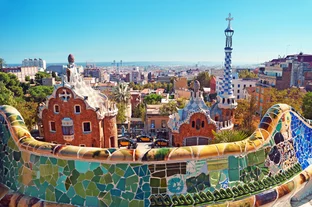
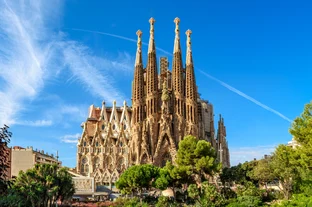
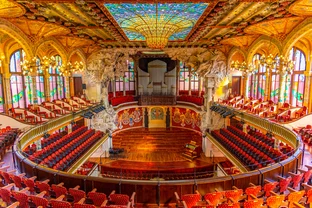
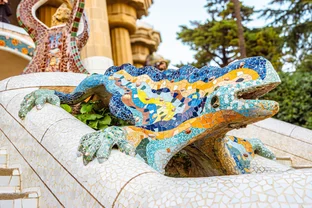
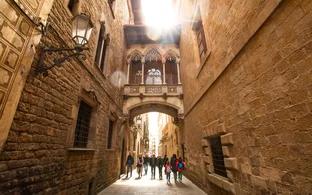
HistoryOrigins, Invasions & The Birth of a Nation Before the arrival of the Romans, the plains surrounding what is now defined as Barcelona were populated by peaceful, agrarian people known as the Laetani, while other parts of the Catalonia were settled by the Iberians. The Greeks were the region's first immigrants, setting up a sizable trading colony on the northern coast at Empúries, the remains of which can still be seen today. Empúries was also the entry point for the Romans, who were at war with Carthage, a northern African power, for dominance over the western Mediterranean. Their base on the peninsula was New Carthage (Cartagena), a city rich in silver and bronze mines that the Romans saw as prime booty. In response to an attack on Rome led by Hannibal, the Romans started their subjugation of the Peninsula using Tarraco (Tarragona) as a base. Barcino (Barcelona), with its lack of a harbor, served merely as port of call between Tarraco and Narbonne in France -- but out of that, a town grew. It mushroomed out from Mons Taber, the highest point of the city, where the cathedral now stands. Traces of Roman civilization can still be seen in Barcelona and to a much greater extent in Tarragona. When Rome fell in the 5th century, the Visigoths pounced, taking a broad swath stretching from the eastern Pyrénées to Barcelona. The chaotic rule of the Visigoth kings, who imposed their sophisticated set of laws on existing Roman ones, lasted about 300 years. The Visigoths were prolific church builders, and Visigothic fragments still survive in Barcelona and, more vividly, in Tarragona's cathedral. In A.D. 711, Moorish warriors led by Tarik crossed over into Spain and conquered the country. By 714, they controlled most of it, except for a few mountain regions around Asturias. Their occupation of Barcelona was short-lived, which accounts for why the city has virtually no vestiges of Moorish architecture compared with al-Andalús, or Andalusia, where their culture flourished. In the Pyrénées, Catalonia's heartland, the Moors clashed head on with the Franks, who, led by Charlemagne, drove them back south. In 801, Louis the Pious, son of Charlemagne, took Barcelona and set up a buffer state, marking the territorial boundaries (known as the Marcha Hispánica) of what was to become medieval Catalonia and endowing the local language with elements of his own (Provençal). Counts were awarded various territories. Guifré el Pilós (Wilfred the Hairy; 878-97) acquired several (including Barcelona) and managed to unite the area through a bloody battle that history has deemed the birth of the Catalonia. In the 9th century, mortally wounded from a battle against the Moors, the Frankish emperor dipped the fingers of the hairy warrior in his own blood and traced them down the count's shield, creating the Quatre Barres, the future flag of Catalonia. What followed was a 500-year-long dynasty of Catalan count-kings with the freedom to forge a nation. The Golden Age & Decline Catalonia entered the next millennium as a series of counties operating under the feudal system. It was gathering political strength, and artistic and artisan disciplines were beginning to flourish. Under Ramón Berenguer III (1096-1131) and his son, the region annexed the southern Tarragonese territories and neighboring Aragon as well. Further expansion came under Jaume I (1213-76), who conquered Sicily and the Balearic Islands and set up Catalonia as the principal maritime power of the Mediterranean. Under his long reign, the second city walls (more extensive than the old Roman ones) and the massive drassanes (shipyards) were built, and a code of sea trade and a local parliament were established. Mercantile wealth led to the construction of such great Gothic edifices as the church of Santa María del Mar and its surrounding mansions, the Saló del Tinell at the Royal Palace, and the Saló del Cent. Catalan literature and language also greatly benefited from the city's continuing prosperity. In 1479 this was interrupted, however, by the most far-reaching of all royal unions, that of Fernando II of Catalonia-Aragon (1452-1516) to Isabel of Castile (1451-1504). Spain was at last united, and Catalonia lost its autonomy in the shift. The pious "Catholic Kings" embarked on a bloody process of expelling all Muslims and Jews from Spain, including those remaining in Barcelona's El Call. Even though Columbus was received upon his return from the discovery of America in Barcelona, Catalans were prohibited from trading with the New World. In the early 17th century, under the rule of Felipe IV (1605-55), anti-centralist feeling was further agitated by Spain's "Thirty Year War" with France, Catalonia's neighbor, with which Catalonia soon allied. The most emotive of all uprisings, the so-called Guerra dels Segadors (Harvesters' War), was squashed by Spanish troops and, as a final blow, in 1650 the king ceded Catalan lands north of the Pyrénées to France. In 1700 a Bourbon prince, Philip V (1683-1746), became king, and the country fell under the influence of France. Philip V's right to the throne was challenged by a Habsburg archduke of Austria, thus giving rise to the War of Spanish Succession. Catalonia backed the wrong horse and Philip V, after taking the city on September 11, 1714 (still celebrated as the Diada, the Catalan national day), outlawed the language, closed all universities, and built a citadel (on the site of the Ciutadella Park) to keep an eye of the rowdy population. The Renaixença & Modernism Backed by a hard-working populace, Barcelona was the first Spanish city to embrace the Industrial Revolution. Textiles, with raw materials being brought in from the New World, became big business, and Barcelona gained the reputation as the "Manchester of the South." This newfound wealth led to the 19th-century renaixença (renaissance), a heady time of artistic and economic growth not known since the prosperous 14th century. In cultural terms it was symbolized by the revived Jocs Florals, a poetry competition that celebrated the Catalan language; the demolition of the city walls; construction of L'Eixample (extension, or "new city"); and, of course, the modernista movement, where Gaudí and his contemporaries held sway. The international exhibition of 1888, a showcase of the glories of the new, cashed-up Catalonia, drew over two million visitors. Politically speaking, the Lliga de Catalunya, Catalonia's first pro-independence party, was founded. Anarchist and communist groups were mushrooming underground and acting above; in 1893 bombs were thrown into the audience at the Liceu Opera House by an anarchist, to the horror of the rest of Europe. As in most periods of rapid growth, the gap between rich and poor was becoming increasingly more evident, and a subculture grew, planting the seeds of the city's reputation for excess, seediness, and political action. In 1876 Spain became a constitutional monarchy. But labor unrest, disputes with the Catholic Church, and war in Morocco combined to create political chaos in the entire country. The political polarization of Barcelona and Madrid erupted in 1909. Furious that the national government had lost the colonies in America (and therefore valuable trade) and was conscripting Catalans for an unwanted war in Morocco, rabble-rousers set fire to dozens of religious institutions in the city. Known as the Setmana Tràgica (Tragic Week), over 100 people died and many more were injured. All suspected culprits, even some who had not been in Barcelona at the time, were executed. The 20th Century On April 14, 1931, a revolution occurred, the second Spanish Republic was proclaimed, and King Alfonso XIII (1886-1941) and his family were forced to flee. Initially, the liberal constitutionalists ruled, but soon they were pushed aside by the socialists and anarchists. These adopted a constitution separating church and state, secularizing education, and containing several other radical provisions, including autonomous rule for Catalonia. In 1931 Francesc Macià (1859-1933) declared himself president of the Catalan republic. But the extreme nature of these reforms fostered the growth of the conservative Falange party (Falange española, or "Spanish Phalanx"), modeled after Italy's and Germany's fascist parties. By the 1936 elections, the country was divided equally between left and right, with Catalonia firmly to the left. In Barcelona, attacks on bourgeois symbols (and people) and the occupation of public buildings by collectives were common. On July 18, 1936, the army, supported by Mussolini and Hitler, tried to seize power, igniting the Spanish Civil War. General Francisco Franco, coming from Morocco to Spain, led the Nationalist (rightist) forces in fighting that ravaged the country. By October 1, Franco was clearly in charge of the leadership of nationalist Spain, abolishing popular suffrage and regional autonomy -- in effect, establishing totalitarian rule. Over the next 3 years, Barcelona and the Catalan coast were bombed by German and Italian fighter planes, untold numbers of citizens were executed, and thousands fled across the Pyrénées into France. Then Franco's forces marched into Barcelona under the banner "Spain is here." The Catalan language and culture were once again forced underground, and Francesc Macià was sentenced to 30 years in prison. Spurred on by even worse conditions in the south, where hunger and poverty were an everyday threat, millions of immigrants arrived in Barcelona in the middle of the century. The 1960s saw another economic boom, this time led by tourism, which grew into an important industry on the Costa Brava and Costa Daurada. Communists formed militant trade unions, and a working class was embittered by decades of repression. Before his death, General Franco selected as his successor Juan Carlos de Borbón y Borbón (b. 1938), son of the pretender to the Spanish throne. A new constitution was approved by the electorate and the king; it guaranteed human and civil rights, as well as free enterprise, and ended the status of the Roman Catholic Church as the church of Spain. It also granted limited autonomy to several regions, including Catalonia and the Basque provinces. The election of the conservative Convergènica i Unio party, with Jordi Pujol (b. 1930) at the helm, came in 1980, spurring on decades of negotiations for even greater self-rule, a battle that still continues. In 1981 a group of right-wing military officers seized the Cortés (parliament) in Madrid and called upon King Juan Carlos to establish a Francoist state. The king, however, refused, and the conspirators were arrested. The fledgling democracy overcame its first test, and Catalonia's morale and optimism were boosted even further when the socialists won the national elections a year later. Catalanista liberals, such as the Gauche Divine (Divine Left) party, dominated the city's counterculture for the rest of the decade, as engineers and town planners at the socialist-led city hall prepared Barcelona for the 1992 Olympic Games and its new, modern era. In 1998 Catalan became the official language of education and the judiciary, with quotas imposed on the media as well. The following year more than 43,000 adults enrolled for the free Catalan language courses supplied by the Generalitat. In 2004 the Spanish Socialist government in Madrid, led by the pragmatic José Luis Zapatero, gave the official approval for Catalan to be a written and spoken language within the European Union, and in 2006 helped pass a new estatut -- or statute -- granting the province more autonomy. These two measures were both strongly opposed by the conservative Partido Popular led by Mariano Rajoy.
Note: This information was accurate when it was published, but can change without notice. Please be sure to confirm all rates and details directly with the companies in question before planning your trip.
|
|||||||||||||||||||||||||||||||||||||||||||||||||||||||||||||||||||||||||||||||||||||||||||||||||||||||||||||||||||||||||||||||||||||||||||||||||||||||||||||||||||||||||||||||
| Home | Destinations | Hotels | Trip Ideas | Deals & News | Book a Trip | Tips & Tools | Travel Talk | Bookstore | ||||||||||||||||||||||||
| About Frommer's | FAQ | Contact Us | Help | Site Map | Privacy Policy | Advertise With Us | ||||||||||||||||||||||||
|
||||||||||||||||||||||||
| © 2000-2008 by Wiley Publishing, Inc. All rights reserved. | ||||||||||||||||||||||||
| Home > Destinations > Europe > Spain > Barcelona > In Depth > History |