Home > Destinations > Europe > Spain > Barcelona > Planning a Trip > Health & Safety
Bookstore Travel Talk - Our Message Boards Tips and Tools Book a Trip Deals and News Trip Ideas, Activities, Lifestyles Hotels Destinations Frommers.com Home
Frommer's - The best trips start here. Frommer's - The best trips start here.
Sign up for our FREE Newsletters! Win a FREE Trip
  Email This Article Email Print This Article Print Get Frommer's RSS Feed RSS

Health & Safety

Spain does not pose any major health hazards. The rich cuisine -- garlic, olive oil, and wine -- may give some travelers mild diarrhea, so take along some anti-diarrhea medicine, moderate your eating habits, and even though the water is generally safe, drink mineral water only. Fish and shellfish from the polluted Mediterranean should only be eaten cooked, but though Barcelona is right beside the sea a lot of the fish and shellfish you see in markets and restaurants actually come from the cleaner Atlantic-washed northern provinces and you might risk the odd raw percebe (goose barnacle) if you can afford it.

If you are traveling around Spain (particularly southern Spain) over the summer, limit your exposure to the sun, especially during the first few days of your trip and, thereafter, from 11am to 2pm. Use a sunscreen with a high protection factor and apply it liberally. Remember that children need more protection than adults do.

The water is safe to drink throughout Spain; however, do not drink the water in mountain streams, regardless of how clear and pure it looks.

General Availability of Healthcare

No shots of any sort are required before traveling to Spain. Once there, medicines for a wide variety of common ailments from colds to diarrhea can be obtained over-the-counter at local chemists or farmacias. Generic equivalents of common prescription drugs are also usually available in Spain. (However it does no harm to bring OTC medicines with you to be on the safe side.)

Contact the International Association for Medical Assistance to Travelers (IAMAT; tel. 716/754-4883 or, in Canada, 416/652-0137; www.iamat.org) for specific tips on travel and health concerns in Spain and for lists of local, English-speaking doctors. The United States Centers for Disease Control and Prevention (tel. 800/311-3435; www.cdc.gov) provides up-to-date information on health hazards by region or country and offers tips on food safety. The website www.tripprep.com, sponsored by a consortium of travel medicine practitioners, may also offer helpful advice on traveling abroad. You can find listings of reliable clinics overseas at the International Society of Travel Medicine (www.istm.org).

Common Ailments

Change of Diet -- No need to go on a tempting cholesterol binge if you really don't want to. Vegetarians can follow their usual diet pattern in Barcelona, as there are an increasing number of vegetarian eating spots available as well as a multitude of herbolarios, or health-food shops.

Sun Exposure -- In the hot weather, do as the locals do and avoid the sun between noon and 4pm. Use a sunscreen with a high protection factor and apply it liberally. Remember that children need more protection than adults do.

Sea Hazards -- Urban beaches in Barcelona have lifeguards on duty and are marked by flags; green is safe, yellow means you should take caution, and red means stay out. Where there are no guards on duty use your common sense and note that, particularly north of Barcelona along the Costa Brava, the seabed is rocky. Over the past years much has been done to improve the standard of Spain's beaches in terms of water pollution, leading to a consistently high rating in terms of cleanliness. At the onset of summer, jellyfish can be a problem. They are not poisonous but do have a nasty sting. If you do get bitten, seek assistance from the nearest farmacia (drugstore).

Respiratory Illnesses -- Lodged between the mountains and the sea, Barcelona can often trap smog from its nearby industrial belt. While the quality of the air is monitored, local media do not publish "high risk" days. Although the problem is nowhere near the level of, say, Tokyo, common sense is required for people with respiratory illnesses.

Avoiding "Economy Class Syndrome"

Deep vein thrombosis, or as it's know in the world of flying, "economy-class syndrome," is a blood clot that develops in a deep vein. It's a potentially deadly condition that can be caused by sitting in cramped conditions -- such as an airplane cabin -- for too long. During a flight (especially a long-haul flight), get up, walk around, and stretch your legs every 60 to 90 minutes to keep your blood flowing. Other preventative measures include frequent flexing of the legs while sitting, drinking lots of water, and avoiding alcohol and sleeping pills. If you have a history of deep vein thrombosis, heart disease, or another condition that puts you at high risk, some experts recommend wearing compression stockings or taking anticoagulants when you fly; always ask your physician about the best course for you. Symptoms of deep vein thrombosis include leg pain or swelling, or even shortness of breath.

What To Do If You Get Sick Away From Home

Spanish medical facilities are among the best in the world. If a medical emergency arises, your hotel staff can usually put you in touch with a reliable doctor. If not, contact the American embassy or a consulate; each one maintains a list of English-speaking doctors. Medical and hospital services aren't free, so be sure that you have appropriate insurance coverage before you travel.

Pack prescription medications in your carry-on luggage. Carry written prescriptions in generic, not brand-name form, and dispense all prescription medications from their original vials. Also bring along copies of your prescriptions in case you lose your pills or run out.

We list Barcelona hospitals and emergency numbers under "Fast Facts: Barcelona," in chapter 4, "Getting to Know Barcelona."

If you suffer from a chronic illness, consult your doctor before your departure. Pack prescription medications in your carry-on luggage, and carry them in their original containers, with pharmacy labels -- otherwise they won't make it through airport security. Carry the generic name of prescription medicines, in case a local pharmacist is unfamiliar with the brand name.

For travel abroad, you may have to pay all medical costs upfront and be reimbursed later.

Staying Safe

Terrorism -- The bomb attacks on three suburban trains in Madrid on March 11, 2004, resulted in the deaths of 200 people; since then, political and public attention throughout Spain has been strongly focused on the threat of terrorism.

A direct or indirect consequence of the massacre was that after a massive protest demonstration of two million people in the streets of the city, voters unexpectedly returned the Socialist party to power in the March 14, 2004, general elections. (The policy of the new president, Rodríguez Zapatero, had always been to oppose the war in Iraq, and one of his first acts was to authorize the full withdrawal of Spanish troops from that country just over 3 months later.)

To date there is nothing to suggest that Islamic terrorism constitutes a more serious threat in Barcelona than in any other major world city. U.S. tourists traveling to Spain should, however, exercise caution and refer to the guidance offered in the Worldwide Caution Public Announcements issued in the wake of the September 11, 2001, terrorist attacks in the United States.

The more local threat comes from ETA, the Basque separatist-terrorist organization. A smaller Marxist group, GRAPO, which mounted several attacks since 1999 and killed three people, has in recent years been inactive.

Where all this leaves Barcelona is uncertain. Traditionally, ETA attacks have been aimed mainly at the seat of the central government in Madrid or at Basque cities like Bilbao and San Sebastián. Although Basque terrorist bombings in the Catalan capital have occurred in the past--the last and deadliest at a supermarket in the city center in 1987, which took 21 lives--the general feeling is that such actions are unlikely to occur here again. But given the almost pathological unpredictability of ETA, whose diminishing number of attacks are now possibly planned and carried out by a small team of radicals, the group's next move is anyone's guess.

Conventional Crime -- While most of Spain has a moderate level of conventional crime, and most of the estimated one million American tourists have trouble-free visits to Spain each year, the principal tourist areas have been experiencing an increase in violent crime. Barcelona has reported growing incidents of muggings and violent attacks, and older tourists and Asian-Americans seem to be particularly at risk. Criminals frequent tourist areas and major attractions such as museums, monuments, restaurants, hotels, beach resorts, trains, train stations, airports, subways, and ATMs.

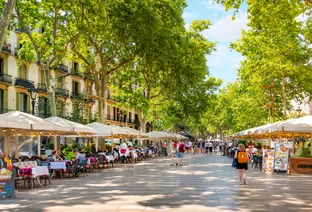
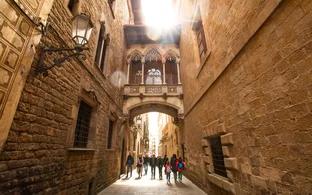
Reported incidents have occurred in key tourist areas such as La Rambla and the narrow lanes of the Barri Gòtic. Travelers should exercise caution, carry limited cash and credit cards, and leave extra cash, credit cards, passports, and personal documents in a safe location. Crimes have occurred at all times of day and night, though visitors -- and residents -- are more vulnerable in the early hours of the morning.

Thieves often work in teams or pairs. In most cases, one person distracts a victim while the accomplice performs the robbery. For example, a stranger might wave a map in your face and ask for directions or "inadvertently" spill something on you. While your attention is diverted, an accomplice makes off with the valuables. Attacks can also be initiated from behind, with the victim being grabbed around the neck and choked by one assailant while others rifle through the belongings. A group of assailants may surround the victim, maybe in a crowded popular tourist area or on public transportation, and only after the group has departed does the person discover that he has been robbed. Some attacks have been so violent that victims have needed to seek medical attention afterward.

Theft from parked cars is also common. Small items like luggage, cameras, or briefcases are often stolen from parked cars. Travelers are advised not to leave valuables in parked cars and to keep doors locked, windows rolled up, and valuables out of sight when driving. "Good Samaritan" scams are unfortunately common. A passing car will attempt to divert the driver's attention by indicating there is a mechanical problem. If the driver stops to check the vehicle, accomplices steal from the car while the driver is looking elsewhere. Drivers should be cautious about accepting help from anyone other than a uniformed Spanish police officer or Civil Guard.

The loss or theft abroad of a U.S. passport should be reported immediately to the local police and the nearest U.S. embassy or consulate. U.S. citizens may refer to the Department of State's pamphlet, A Safe Trip Abroad, for ways to promote a more trouble-free journey. The pamphlet is available by mail from the Superintendent of Documents, U.S. Government Printing Office, Washington, D.C. 20402, via the Internet at www.gpoaccess.gov/index.html, or via the Bureau of Consular Affairs home page at http://travel.state.gov.

ETA Strikes Again

With the bombing of the huge multistory car park of Terminal 4 at Madrid's Barajas Airport on December 30, 2006, the outlawed Basque separatist-terrorist organization, ETA (Euskadi Ta Askatasuna, or Basque Homeland and Freedom), not only broke its 9-month truce with the government but also caused the first loss of life in 3 1/2 years. (Two luckless Ecuadorians, who had been sleeping in their vehicles, did not hear the alarm bells and were killed.) The total repair work was estimated at 40 million euros ($50 million) but the psychological and political cost went far deeper. The governing socialist PSOE (Partido Socialista Obrero Español), led by President José Luis Rodriguez Zapatero, is convinced that patient attempts at negotiation are the only way for a resolution. Conversely, the opposition right-wing PP (Partido Popular), led by Mariano Rajoy, favors treating the terrorists as common criminalsm, and has become increasingly critical of what it regards as an unacceptably conciliatory attitude by the government.

Ironically, on the day prior to the airport attack, Zapatero had been particularly optimistic about the progress of negotiations with ETA. The unannounced bombing therefore was a shock. For its part, ETA claimed in an unapologetic official statement that secret "compromises" agreed to by the government in summer 2006 had not been honored, inferring that the bombing was intended to "jog the government's memory." (The group added--almost as an afterthought--that no loss of life had been intended.) The ruling PSOE declared all future talks with ETA "suspended" until the group renounced violence. The PP regarded this response as inadequate and demanded a total severance of all contact with the outlawed organization. ETA and its nonmilitant counterpart--the banned Herri Batasuna party--in turn pronounced the peace process "more alive than ever," but made no promise to totally reject violence. (Since 1968, when ETA began its campaign of violence, over 800 people have died.) The stalemate between the political parties remains unresolved at the time of this writing.

Dealing With Discrimination

As Barcelona's population slowly becomes more international, overt racial prejudice (never prevalent here, anyway) appears to be diminishing. Still, as in other places, there is a small fringe of hard-core racists.

Since the Madrid bombings of 2004, there has been a slight hardening of attitudes toward Arabs by certain members of the community; and some residents' attitudes toward Latin Americans have been soured by the appearance (in relatively small numbers) of young criminal gangs such as the "Latin Kings" and "Dominican Don't Play" in the outer areas of the city.

Barcelona is as liberal as any other in its acceptance of gays and lesbians, including homosexual marriages.

Solo female travelers can expect to have a reasonably hassle-free trip.


Back to Top


Note: This information was accurate when it was published, but can change without notice. Please be sure to confirm all rates and details directly with the companies in question before planning your trip.


  Email This Article Email Print This Article Print Get Frommer's RSS Feed RSS
Frommer's Barcelona, 2nd Edition Frommer's Barcelona, 2nd Edition

Author: Peter Stone
Pub Date: May 07, 2007
Price: $16.99

Buy Now!
Related Titles:
Frommer's Barcelona Day by Day, 1st Edition
Frommer's Madrid, 2nd Edition
Frommer's Mediterranean Spain with Your Family: From Tranquil Villages to the Bustling Costas, 1st Edition
Add Frommers.com RSS Feed  Add Frommers.com RSS Feed (What's This?)
Add Frommers.com Deals & News to Your Web Site
Add to My Yahoo!     Add to My MSN     More RSS Readers
Add Frommers.com Podcast Add Frommers.com Podcast (What's This?)
Home > Destinations > Europe > Spain > Barcelona > Planning a Trip > Health & Safety